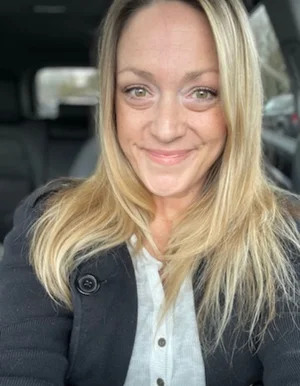
I Survived Sepsis
What I wish I knew about life after sepsis, recovery, and what comes after survival.
Surviving sepsis is a major medical event. But for many survivors, leaving the hospital isn’t the end of the story.
Life after sepsis can look different for everyone.
Some people return to their routines relatively quickly. Others experience ongoing physical, cognitive, emotional, or psychological challenges after sepsis and critical illness. Recovery may take time, and it doesn’t always follow a straight line.
You may hear the term Post-Sepsis Syndrome (PSS) used to describe a collection of challenges some people experience after surviving sepsis.
But one of the most important things I’ve learned in the years since surviving sepsis is this:
Believe your experience.
What Can Life After Sepsis Feel Like?
Some sepsis survivors report changes such as:
Fatigue or weakness
Changes in sleep
Ongoing pain
Difficulty concentrating or remembering things
Brain fog
Anxiety or fear
Changes in mood
Difficulty returning to work or everyday activities
Feeling disconnected from the person they were before sepsis
Not every sepsis survivor experiences these things, and recovery isn’t one-size-fits-all.
It’s also important to remember that not every symptom that happens after sepsis is necessarily caused by sepsis. New, worsening, persistent, or concerning symptoms deserve a conversation with your healthcare provider.
You don’t have to diagnose yourself to begin paying attention to yourself.
Start With What You Know
You know when something feels different.
You know when you’re having trouble doing something that used to come easily.
You know when you’ve pushed yourself and your body seems to pay for it later.
You know when you’re scared, frustrated, exhausted, grieving or confused. You also know when you feel incredibly grateful to be alive while struggling at the exact same time.
You don’t have to immediately know why. Start by noticing.
Ask yourself:
What changed?
What patterns keep showing up?
What seems to make things harder?
What seems to help?
What questions do I want to bring to my healthcare team?
What do I wish the people around me understood?
Those observations aren’t a diagnosis. They’re information.
And that information can help you begin conversations about your recovery.
Sepsis Recovery Doesn't Have to Mean "Getting Back"
For a long time, I thought recovery meant getting back.
Back to my old energy.
Back to my old body.
Back to my old brain.
Back to the person I was before everything happened.
Eleven years after surviving sepsis, I’m not interested in spending the rest of my life chasing her.
She did her job. She got me here.
Now I’m learning the person and the body that are here today.
I’m learning my patterns. I’m learning my limits. I’m learning what helps me. I’m learning when I need rest and when I’m capable of pushing a little.
I’m learning how to ask questions and advocate for myself.
I’m learning what brings me joy and what makes me feel like me.
And I’m still learning…
Maybe that’s the part nobody tells us about life after sepsis.
There isn’t one magical “after.”
We’re living in the middle.
How Long Does Recovery After Sepsis Take?
There isn’t one timeline for sepsis recovery.
Your medical history is yours. Your body is yours. Your circumstances are yours. Your recovery is yours.
I can’t give you a set of instructions for recovering from sepsis, and I don’t think anyone can.
What we can have are better tools for navigating what comes after survival.
We can own our individual timelines instead of measuring ourselves against someone else’s recovery.
We can learn, ask questions and share what we know.
We can find people who understand.
And we can learn to use our voices to ask for what we need.
What Is the VOICE Framework?
That is why I created VOICE, a framework for navigating what comes after survival.
VOICE grew from my own experience of trying to understand life after sepsis without pretending there is a universal roadmap for recovery.
It is a way to start paying attention, asking questions, advocating for yourself and finding your way forward when you don't have all the answers yet.
And it is part of why I’m building Zero Instructions.
Why I Created Zero Instructions
People spend so much time preparing us for the thing.
The diagnosis. The emergency. The ICU. The treatment. The fight to survive.
Nobody really prepares us for what happens after the thing.
That space after survival can leave you with a lot of questions:
Is this normal?
Has anyone else experienced this?
Who am I supposed to talk to about this?
How do I explain what I'm feeling?
What do I do now?
Zero Instructions exists for that space.
It isn't about giving every sepsis survivor the same recovery plan. It's about helping survivors and the people who love them navigate what comes next with more information, better questions, shared experiences and a stronger voice.
If You're Asking "Now What?" After Sepsis
You don’t have to have the whole answer today.
Start with the next question.
Start with what you’re noticing.
Start with your voice.
And keep going.
Surviving is only the beginning.
— Jackie